How old is the Earth, and how do we know?
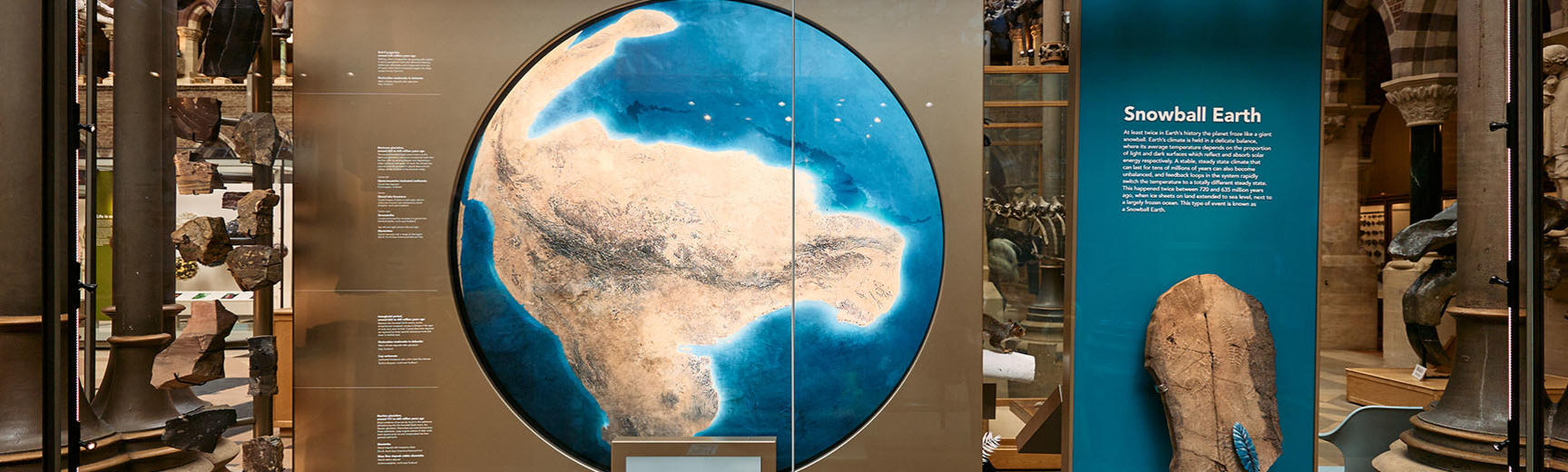
This teaching session uses museum displays and objects to explore the history of the Earth over the past 4.5 billion years.
Students investigate the formation of the Earth, the emergence of early life, and the cycles of evolution and extinction that have shaped our planet through to the present day.
Through a series of activities, students explore the evidence we use to understand the vast scale of geological time, focusing on:
- Geological change – how rocks, landscapes and other geological features provide evidence of
- Mass extinction events – how evidence from the fossil record helps scientists identify major changes in life on Earth.
- Radiometric dating – how scientists use radioactive decay to determine the age of rocks and other materials.
Students are also introduced to the difference between direct observation and scientific inference, and consider how we use evidence to develop and test explanations about Earth's history.
Science learning outcomes
By the end of the session, students will be able to:
- Explain the difference between a scientific idea and a scientific theory.
- Identify evidence that supports ideas about the processes that have shaped the Earth.
- Recognise how scientific discoveries can change our understanding and view of the world.
- Explain how scientists from different specialist fields contribute to our understanding of the Earth.
- Describe some of the key features and events of geological time.
Museum learning outcomes
By the end of the session, students will be able to:
- Handle museum objects carefully and appropriately.
- Make careful observations of museum objects.
- Develop curiosity about real objects and understand why they are collected, cared for and displayed in museums.