


Spirit Preservation
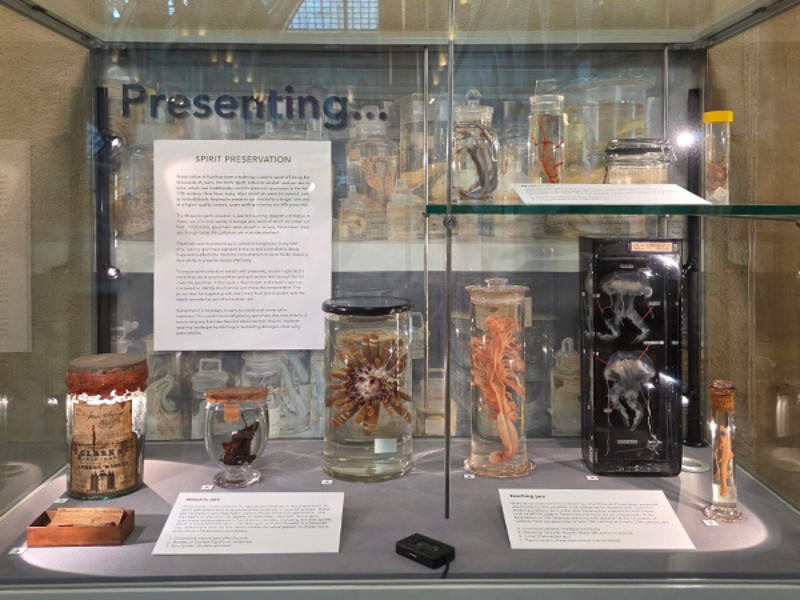
Preservation in fluid has been a technique used to ward off decay for thousands of years. The term ‘spirit’ refers to alcohol, such as rum or wine, which was traditionally used to preserve specimens in the late 17th century. Over time, many other chemicals were discovered, such as formaldehyde, helping to preserve specimens for a longer time and at a higher quality. Indeed, some spirit specimens are 200 years old!
The Museum’s spirit collection is used for teaching, research and display. It makes use of a wide variety of storage jars, some of which are presented here. Traditionally, specimens were placed in unique, hand-blown glass jars, though today the containers are more standardised.
Chemicals used to preserve spirit collections evaporate slowly over time, leaving specimens exposed to the air and vulnerable to decay. Evaporation affects the chemical concentrations of some fluids, reducing their ability to preserve tissues effectively.
To ensure spirit collections remain well preserved, jars are inspected to check they are in good condition and well sealed, with enough fluid to cover the specimen. If the liquid is discoloured, or the level is too low, it is tested to identify the chemical and check the concentration. The jar can then be topped up with the correct fluid and re-sealed, with the details recorded as part of collections care.
Sometimes it is necessary to carry out additional conservation treatment. This could involve rehydrating specimens that have dried out, remounting any that have become detached from mounts, and even repairing breakages by stitching or reattaching damaged areas using glass needles.
Historic Jars
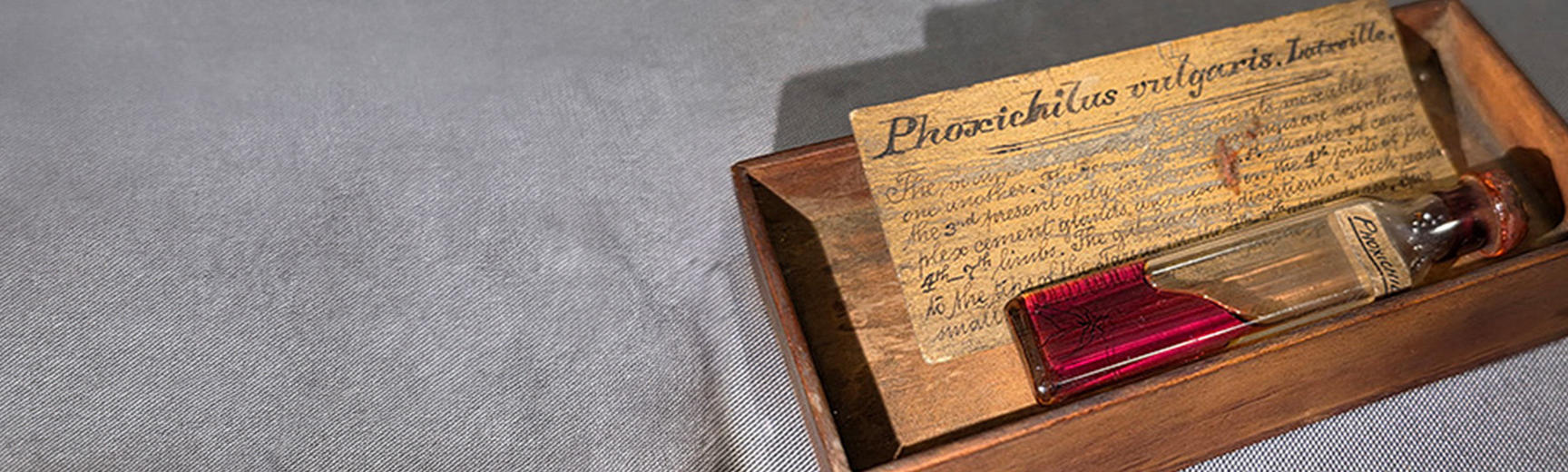
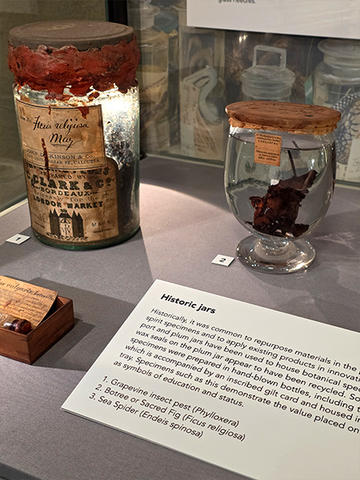
Historically, it was common to repurpose materials in the preparation of spirit specimens and to apply existing products in innovative ways. These port and plum jars have been used to house botanical specimens. The wax seals on the plum jar appear to have been recycled. Some spirit specimens were prepared in hand-blown bottles, including this Sea Spider, which is accompanied by an inscribed gilt card and housed in a bespoke tray. Specimens such as this demonstrate the value placed on these items as symbols of education and status.
Teaching Jars
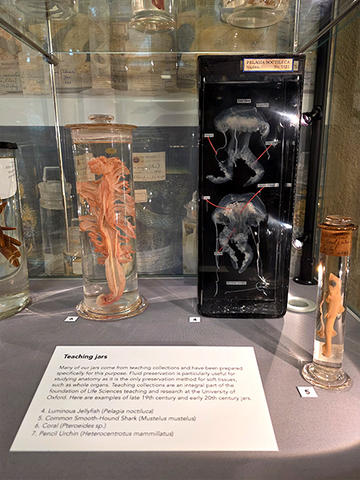
Many of our jars come from teaching collections and have been prepared specifically for this purpose. Fluid preservation is particularly useful for studying anatomy as it is the only preservation method for soft tissues, such as whole organs. Teaching collections are an integral part of the foundation of Life Sciences teaching and research at the University of Oxford. Here are examples of late 19th century and early 20th century jars.
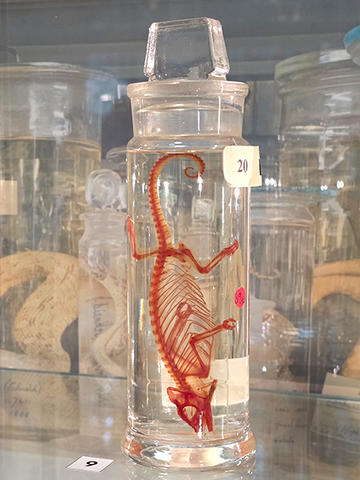
Modern Jars
These are examples of modern specimen jars. Today, mass-produced, standard sized glass jars are used more commonly. When researchers are doing field work, they often use plastic tubes to collect specimens for spirit preservation, which are then transferred to permanent glass containers for long-term storage. Here are examples from the late 20th and 21st centuries.

