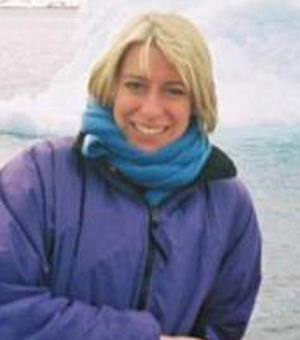
Professor of Biogeochemistry and Chair of Geography, Department of Earth Sciences
Board of visitors
Ros is fascinated by the jigsaw of complex interactions between the evolution of organisms, ocean chemistry, atmospheric composition and Earth’s climate. The extraction of chemical signatures from fossil shells of marine micro-organisms as a tool for constraining past ocean conditions and their influence on climate is fundamental to her research. Yet frustration with the complexities of disentangling the “inorganic” geochemical signal from the overprint of the biomineralising processes has triggered her to seek innovative alternative approaches to constraining past climates and environments but has offered the opportunity to understand "palaeophysiology". Increasingly she is probing the geological past from the biology of modern day organisms.
This ambition broadens into probing biological innovation and environmental change over Earth history since the feedback between the two is inescapable. All modern day organisms have experienced a long evolutionary pathway to arrive at their present incarnation and this history has been accrued to some extent within the genome and physiology of modern day organisms. Indeed such evolutionary history influences the tolerance of different algae to ocean acidification for example, or the trace metal nutrient requirements of different groups of algae across the tree of life.
So her approach is to read the geological history of both climate and the chemical environment from signals of adaptation within genes, which plays out in the evolving affinity and kinetics of the expressed enzymes, or isotopic signals of adaptation within biologically relevant molecules. She is eager to contribute to climate solutions and is currently researching how the ocean takes up carbon and safe methods to sequester additional carbon within the Earth system.